
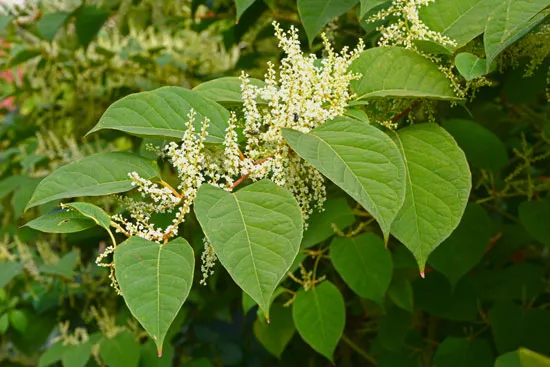
My, this is a beauty! However, it is not a beauty in my area. I was asked to do this one by one of the blog readers, so here goes. This plant is considered invasive in most of the northeastern US (extending into the northern Midwest), as well as Alaska and Oregon. It can grow 6-10 feet and looks somewhat like bamboo. Polygonum actually means ‘many knees (or joints), and there are multiple species of it. It is edible and has no deadly lookalikes.
Unfortunately (or not, depending on your outlook) it spreads like wildfire. Like many invasives, the smallest bit left in the soil if you are trying to eradicate it will grow a new plant. And it is hard to harvest – the roots twist around each other and become one giant knot (see what I did there?). The root is used for medicine and the shoots for food.
Knotweed is actually higher in resveratrol, a powerful antioxidant, than grapes. It contains lots of minerals – calcium, zinc, iodine, magnesium, iron. And it works to clean soil. Knotweed is often found in moist areas like roadside ditches and old mining sites. It has been found to help detoxify the soil of lead, zinc, and copper. (This makes me add the caution to be careful where you harvest it.)
It is used a lot in TCM (traditional Chinese medicine) for arthritis, traumatic injury, jaundice, kidney stones, menstrual pain, burns, skin infections, dental caries, and constipation. It is not traditionally used in Ayurveda or Western herbalism, but more and more research is being done.
One of the most fascinating things I have learned about it is the use with Lyme disease. It is used to address the neurological symptoms of Lyme as well as killing the bacteria that causes it. Knotweed tends to spread into an area about 6 months before the ticks that carry Lyme do. How cool is that?
As far as herbal actions, Polygonum has the following: antimicrobial, immunomodulation, anti-inflammatory, CNS relaxant, antipyretic, analgesic, cardioprotective, vasodilator, anticoagulant (mild), antineoplastic, and hemostatic.
Almost makes you want to plant some!