
While burdock is not toxic to humans or animals, it is considered noxious and invasive. Those little green spiky ‘buttons’ you see on the top of the plant turn brown in the fall and catch on just about anything – clothing, animal fur, a passing dandelion seed (OK, that’s probably pushing it, but you get the idea). I have heard that burdock was the inspiration for velcro – and I can see how.
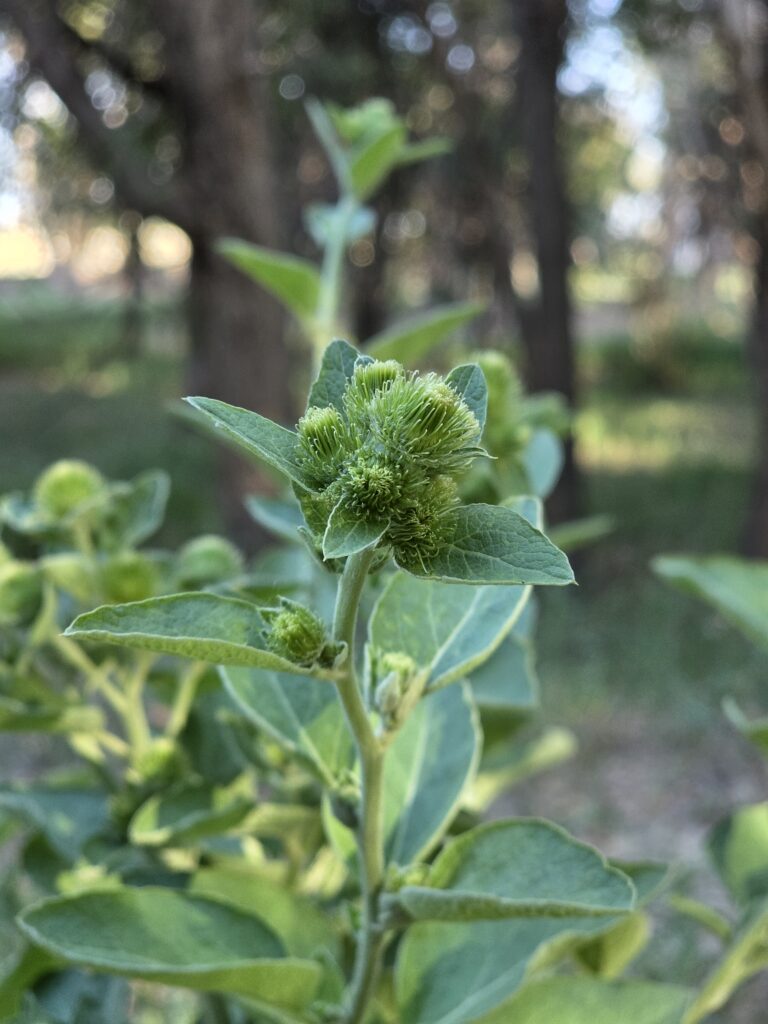
Arctium is also known as gobo in Asian cuisine and most parts of the plant can be eaten. Usually, it is the roots and the young stems. The burdock I have pulled from our pasture has twisted gnarly roots, while the kind I have bought at Pacific Ocean grocery look almost like white carrots. They have a slightly sweet earthy taste – more like carrots than beets. Not bad if you pickle them or dress them up a little with soy sauce and honey.
Burdock is considered an alterative (nourishing and strengthening herb), a chelating agent, and a tonic for the liver. It helps with all organs of elimination to move toxins out of cells where they can be excreted more efficiently. Burdock has shown to affect the liver, kidneys, gallbladder, and skin. I think of it primarily as a liver herb, right behind milk thistle. As liver herb, it is really good for cooling things down, both physically and emotionally. Just don’t expect it to work overnight – this is an herb that is all about a long-term relationship. It is used more as a tea than a tincture, when using the root.
The seeds of burdock can also be used, but they tend to irritate the kidneys if used for a long time. I would stick with the root unless you have a very specific reason for using it.
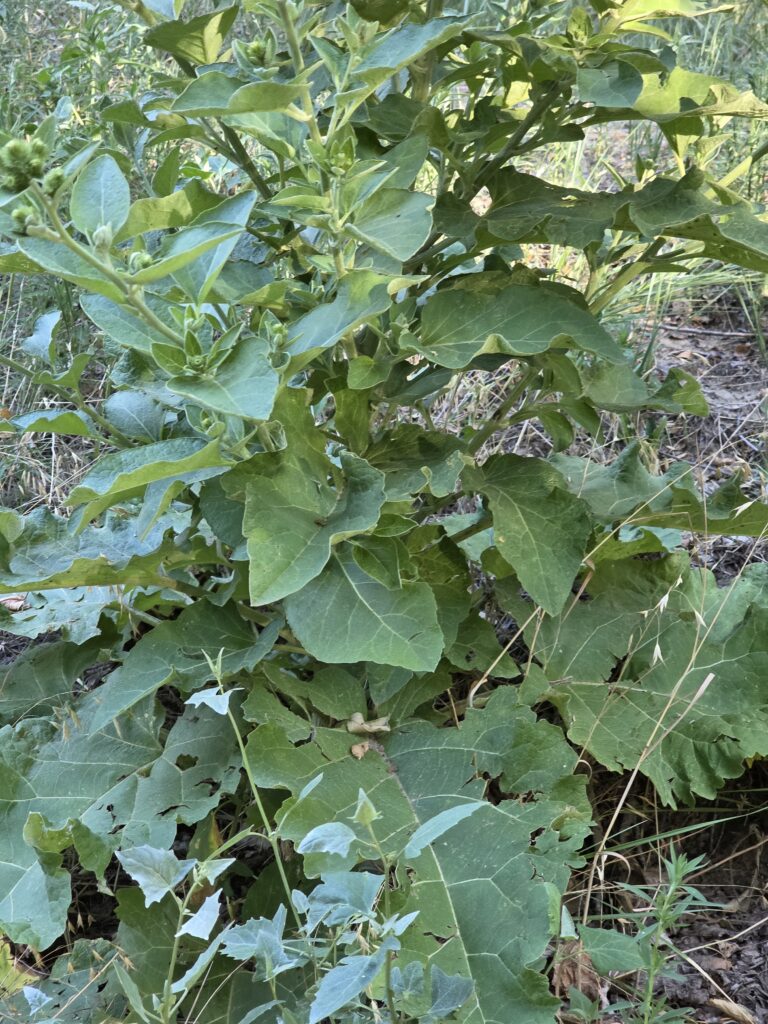
I can usually find it all over the pasture – it doesn’t seem to be too picky about its growing conditions. This year, it has been harder to find. I don’t know if it is related to the hail (unlikely) or lack of available water.
Burdock has also been used as an antimicrobial, but I feel there are better herbs for that use.
I would caution using burdock for a couple reasons: it’s not for pregnant women, as it can stimulate the uterus somewhat – and again, it’s a long-term use herb. I would also be very aware of where you are harvesting it. Burdock works as an accumulator of toxins in the body, and possibly in the soil. A pasture is probably fine. Somewhere that is regularly sprayed with herbicide or pesticide – not so much.
I have a few more ‘noxious weeds’ I plan to cover, then I need another herbal subject. Any suggestions?