
More posts on treating anxiety are coming, I promise. They just require a little more research on my part and a little more attention to detail than what I have in me at the moment.
So…. I know it’s probably a little late for ordering for Christmas presents, but if you get a few bucks for a present, you might like these also.
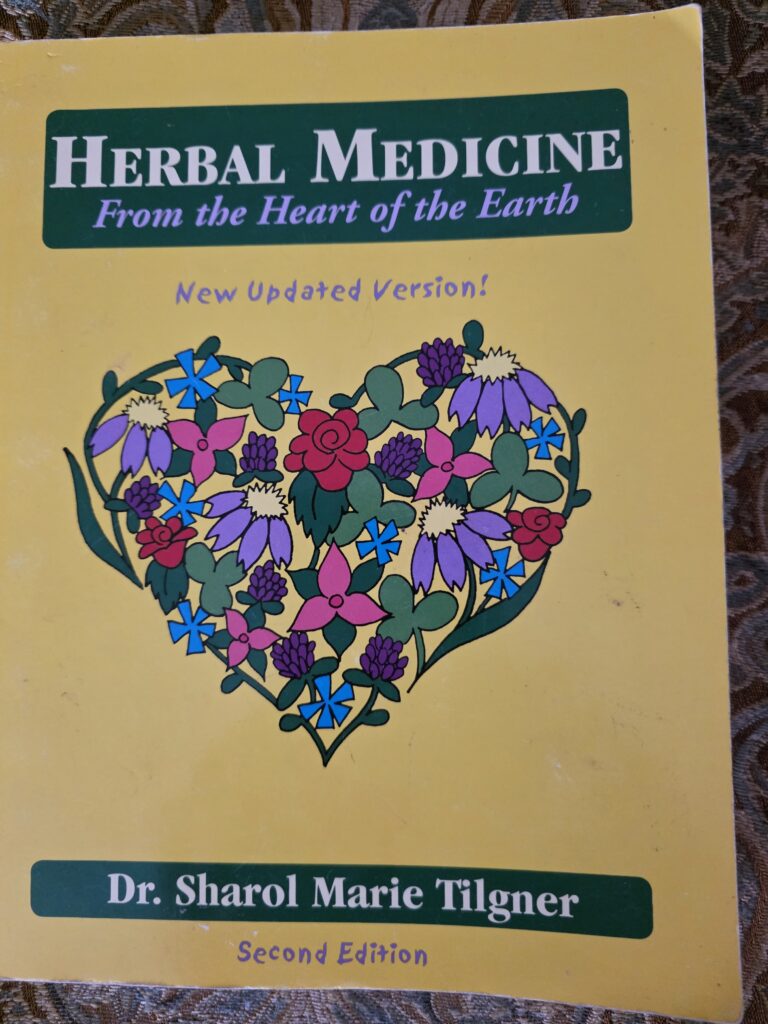
Herbal Medicine from the Heart of the Earth by Dr. Sharol Tilgner. This is my favorite and most used book. It is appropriate for those just starting out in their herbal journey and seasoned professionals alike. The book is divided into several parts: suggestions on what to use for a particular condition, a materia medica (list of herbs with uses, cautions, and detailed descriptions), formulations (recipes for herbal products), and instructions of how to make herbal preparations.
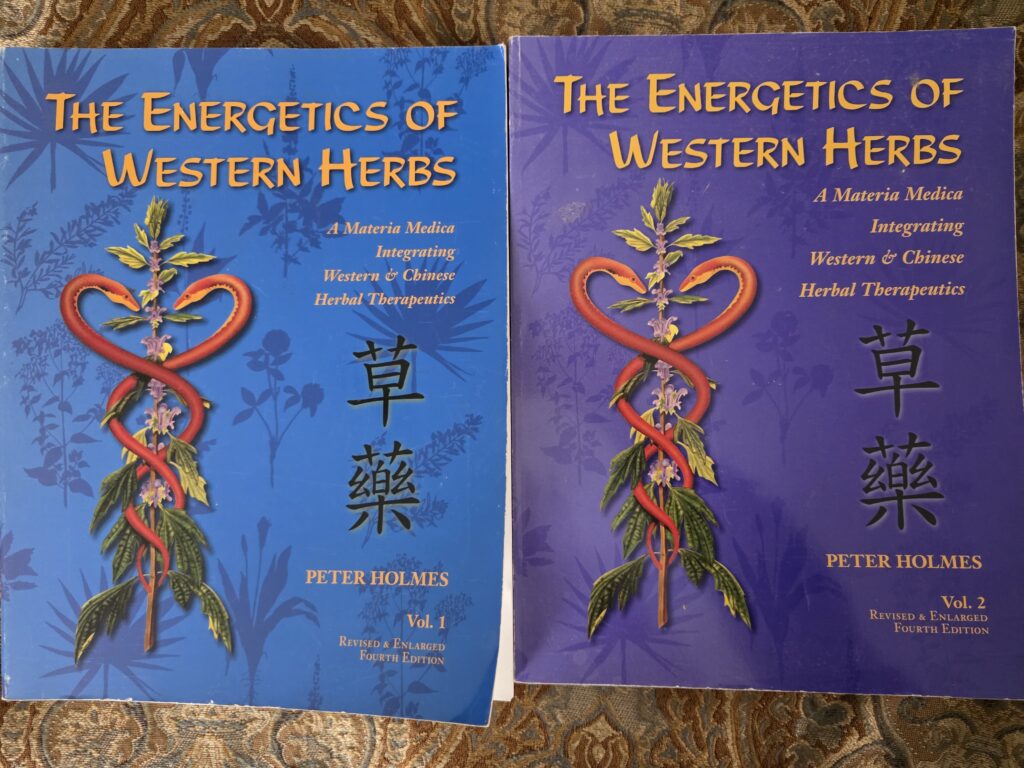
The Energetics of Western Herbs by Peter Holmes. These were some of the most used texts when I was in herb school. They are written more from a Chinese medicine viewpoint, but include botanical drawings, attributions/characteristics of plants, uses, and a bit of history. Tilgner’s book above is somewhat limited in the number of herbs – this set has a lot more. It is more of a comprehensive materia medica with fewer sections on general use.
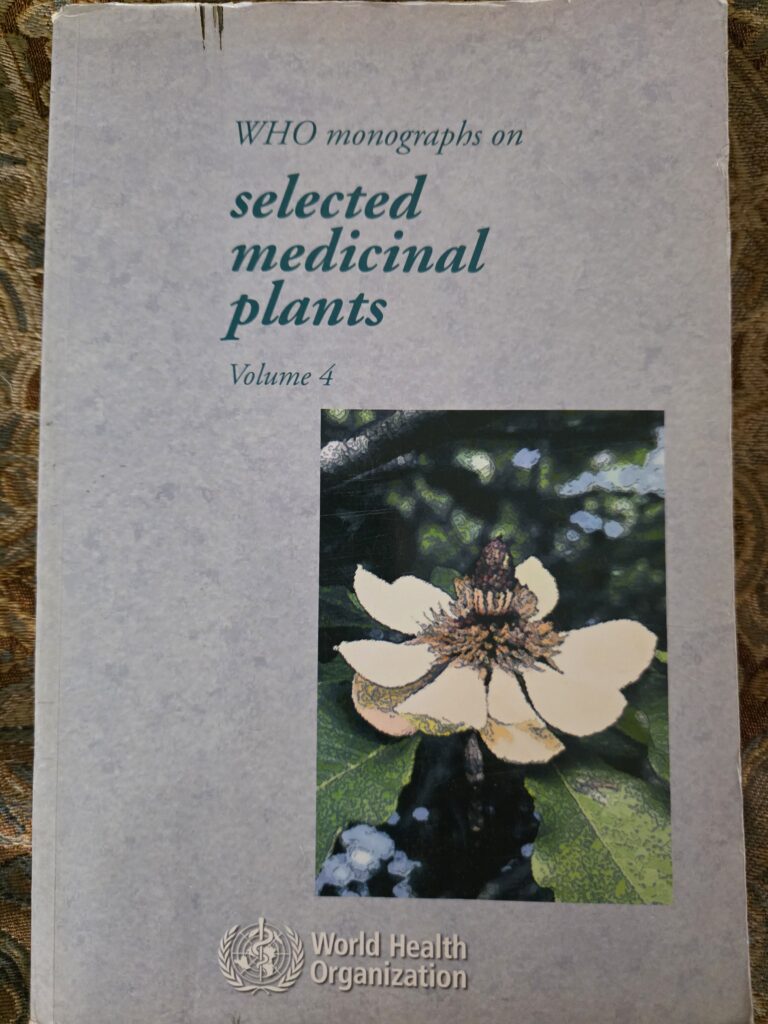
WHO Monographs on Selected Medicinal Plants by the World Health Organization. This is volume 4 of – I don’t know – maybe 9 or 10 by now, although the latest volumes are only available online, not print. While the US doesn’t tend to put a lot of money into studying herbs, other countries and the World Health Organization does. These volumes are arranged like a materia medica (lists of plants) with drawings of chemical structure, lists of various constituents by chemical names, and studies listing all the particulars: number of participants, actual hypotheses that were being tested, and outcomes. These books are not for everyone, but if you are studying herbalism from a more structured evidence-based viewpoint, you may really like them. I think they are great because they allow me to ‘argue’ with people that think herbalism is not a valid medical option.
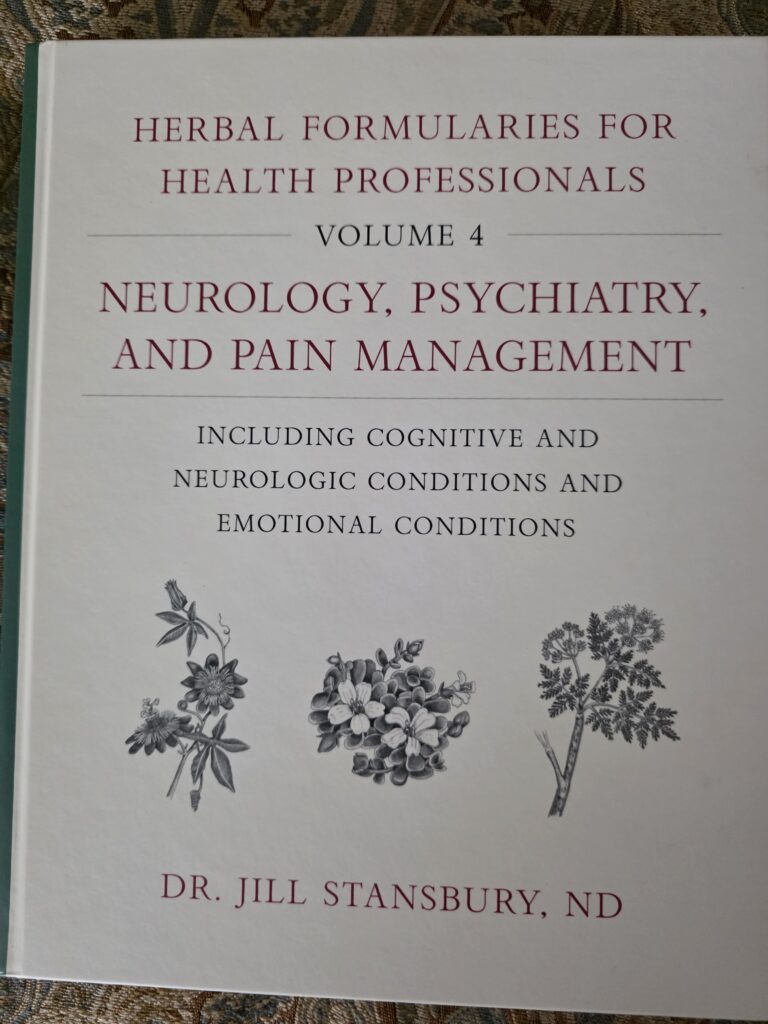
Herbal Formularies for Health Professionals by Dr. Jill Stansbury. This is volume 4 of a five-volume set. Very well written at a more professional level than just ‘throw the herb in some vodka and hope for the best.’ She does use some herbs that are VERY low dose (and the dose makes the poison). I would not recommend these for a beginning herbalist. The formulations she uses are well thought out and balanced but can be edgy with using herbs that I would not consider safe for anyone but a professional herbalist with good insurance to use.
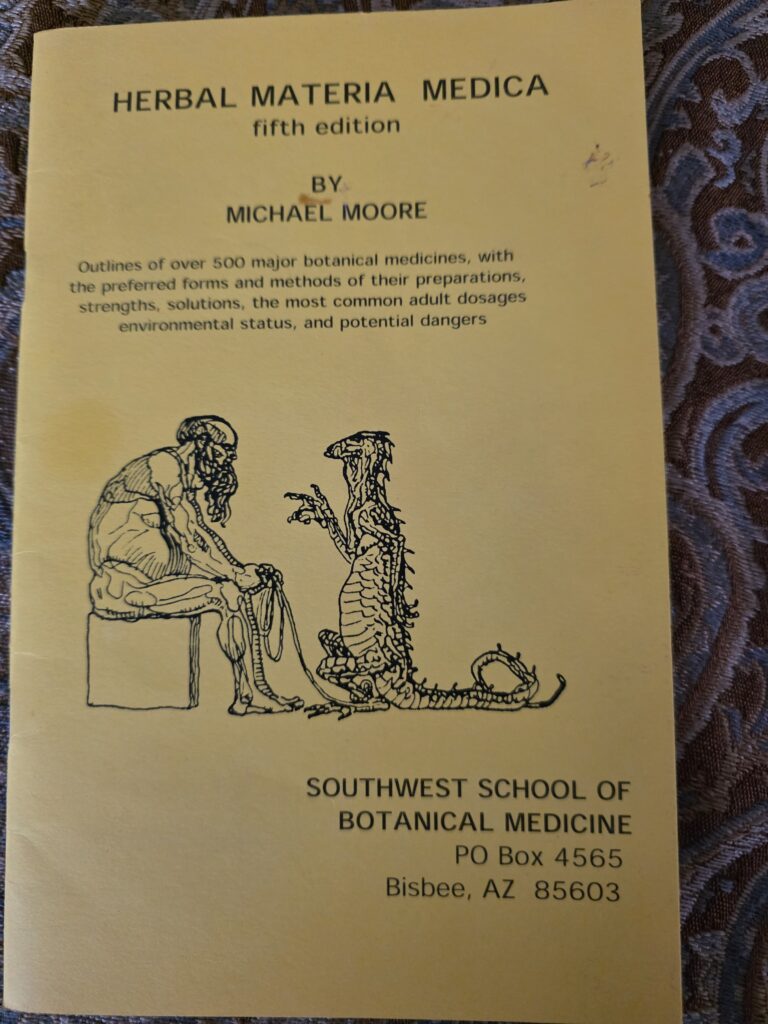
Herbal Materia Medica by Michael Moore. Not really a book, more of a pamphlet. This is the primary source I use for making tinctures. Michael Moore combed through many old sources and texts to find the best ratios for individual herbs. This does not really contain much about the herbs themselves, other than what ratio of herb to alcohol and the percentage of alcohol to use. In my opinion, it’s a must have if you are planning on making your own tinctures.
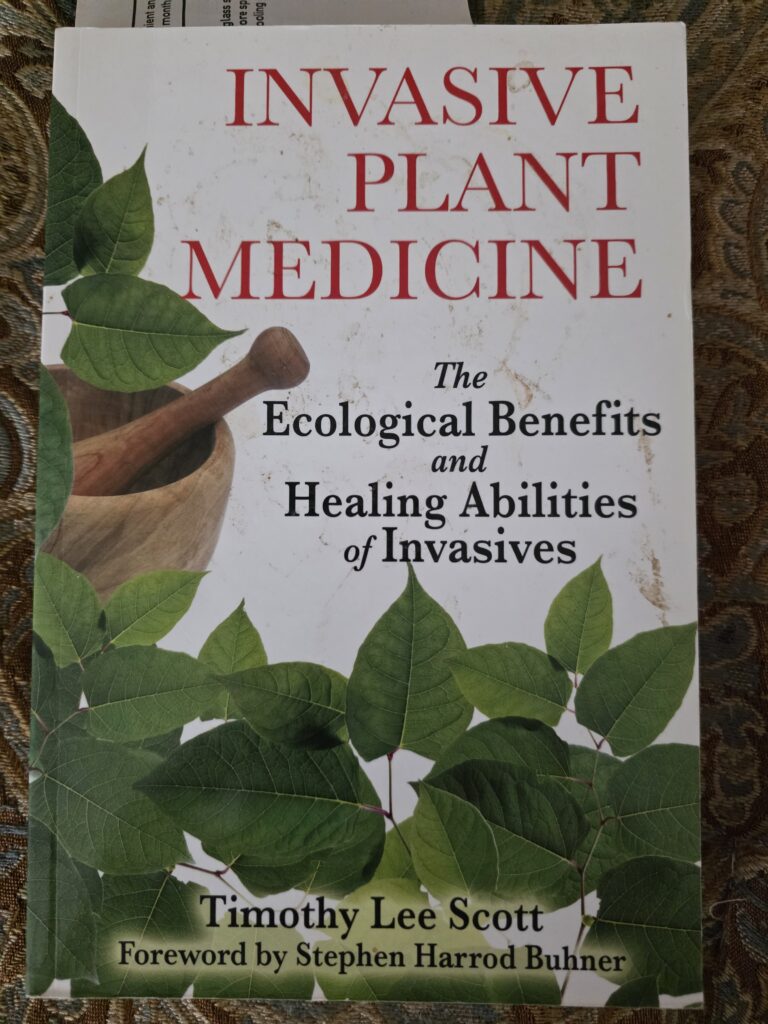
Invasive Plant Medicine by Timothy Scott. Last but certainly not least, is this book. I like to take it with me out in the pasture (as you can tell!). We have so many plants that we think are useless – Russian olive, bindweed, thistle and are considered ‘noxious’ weeds. They are not. They absolutely can be invasive, but some have amazing uses. I really wish Tim Scott would do another volume with additional invasives. This book is also arranged by plant with botanical drawings and maps of common areas of growth but also has historical uses and quotes from explorers and native American herbalists.
Hopefully these titles can give you some reading options when the seed catalogs get overwhelming! Merry Christmas!