
First I apologize for my absence. I had some oral surgery done and was not able to get the blog posts done. Second, the lactuca I am using is not a great example. The Lactuca villosa that is under that post name is a much better example of what should be used. First and foremost, when using wild crafted plants, be VERY sure you know the plant you are using. To my knowledge, lactuca does not have any poisonous look-alikes.
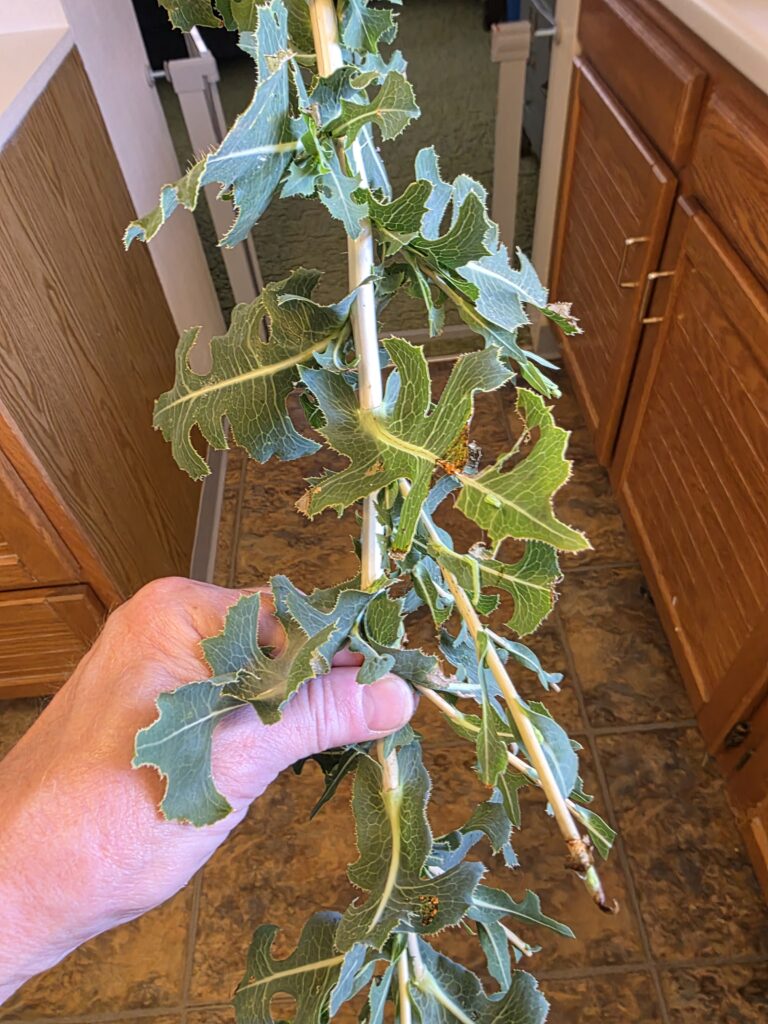
I use the kitchen style method for plants that have a lot of latex or resin because they just don’t rehydrate well for percolation. Let’s get started!
Equipment needed: blender (optional), scale, something to measure liquids in milliliters, several jars with closures, funnel, coffee filter, plastic wrap.
Getting ready:
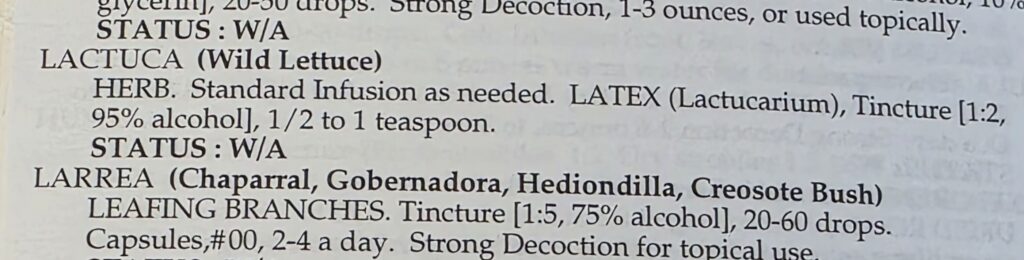
Here is the entry on Lactuca from Micheal Moore. You will use twice as much liquid (menstrum) as plant material (marc), and you need to use 95% alcohol. I use everclear for just about everything as I can just buy it and dilute as necessary. So straight Everclear for this one.
After washing and letting the plant material dry (no soap, just water. I mean, you’re not harvesting plants from under a cow pattie, are you?), cut it coarsely and weigh.
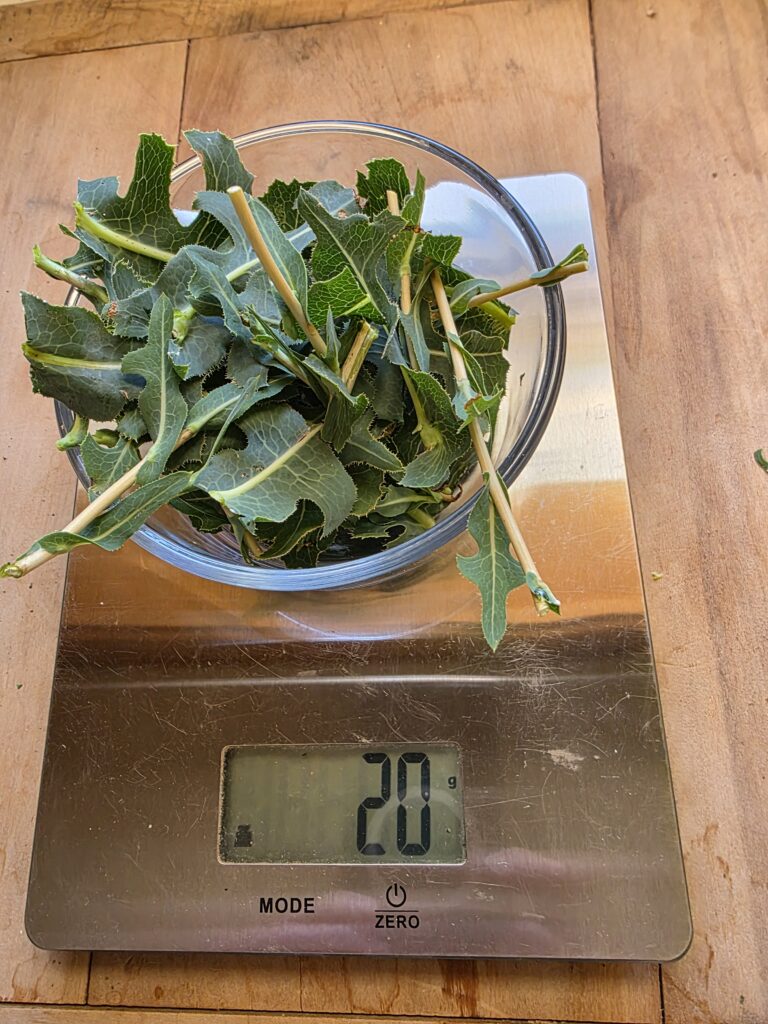
I am making a really small batch, because I don’t need any except to show the process to you guys.
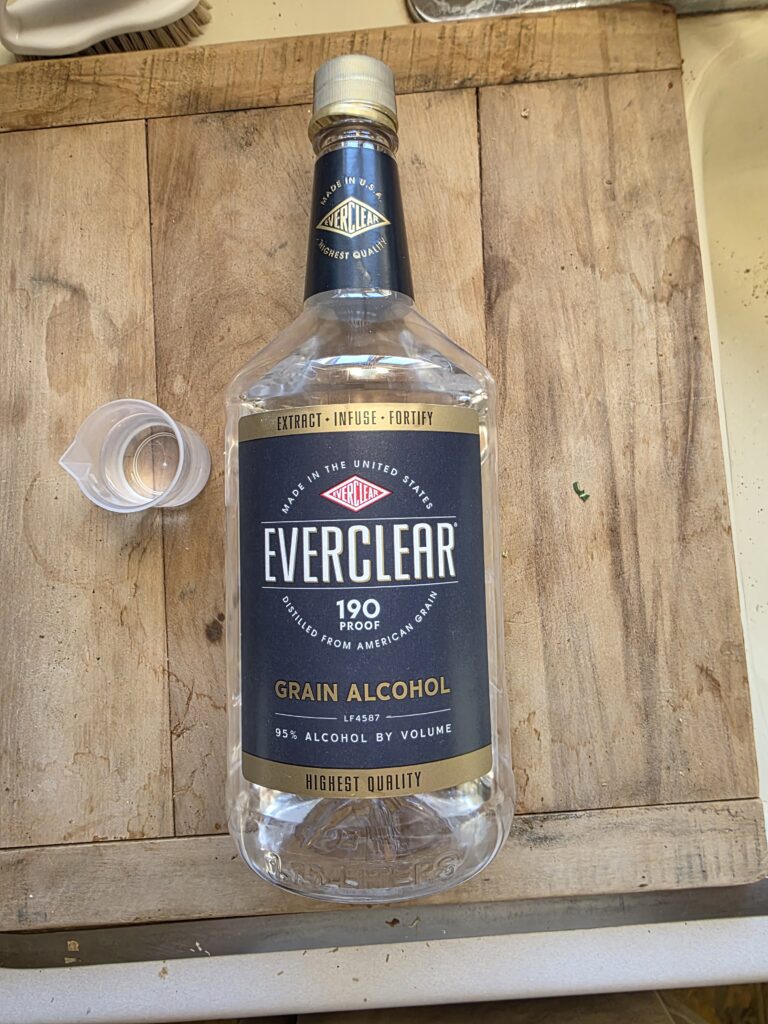
Next measure the menstrum. I use metric measurements because it is much easier for me – and math is hard. So twice the amount of marc in grams is 40 milliliters of menstrum. (1 gram equals 1 milliliter/cubic centimeter). So 40 ml (or cubic centimeters – ccs) of Everclear. I want 95% alcohol, so I won’t dilute the everclear.
Now throw both in the blender and blend until mixed well. It does not have to be completely liquified. You don’t have to do this step, but it shortens the process a LOT. Blending cuts the cell membranes of the plant to allow the alcohol to penetrate and start extracting the constituents.
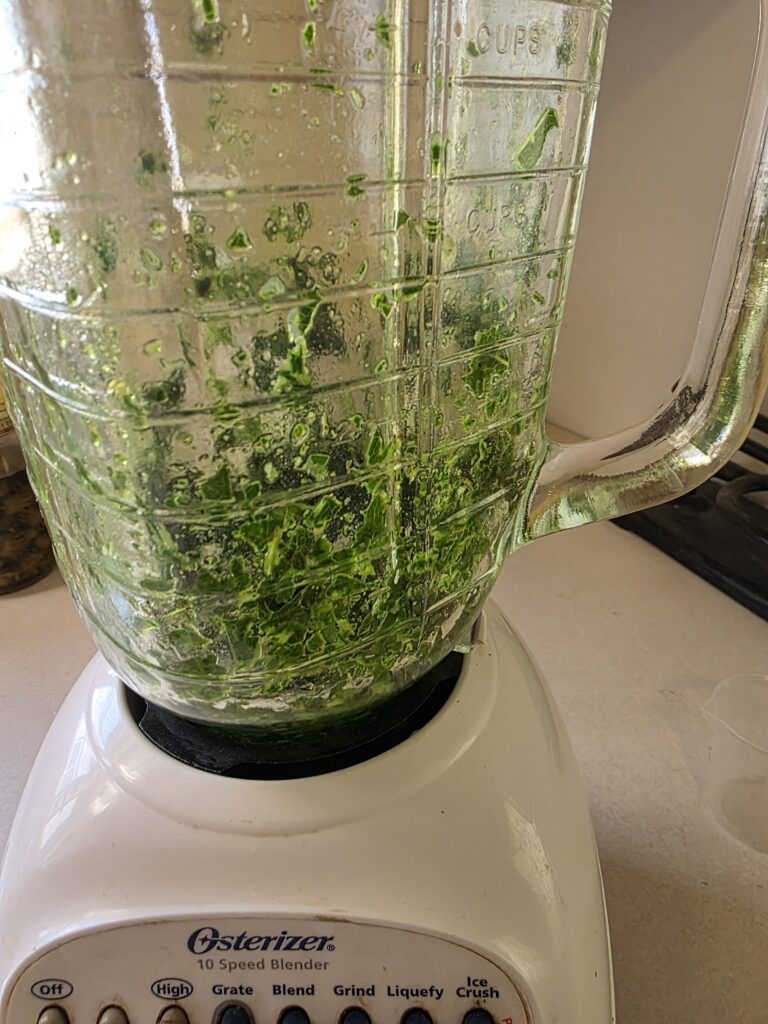
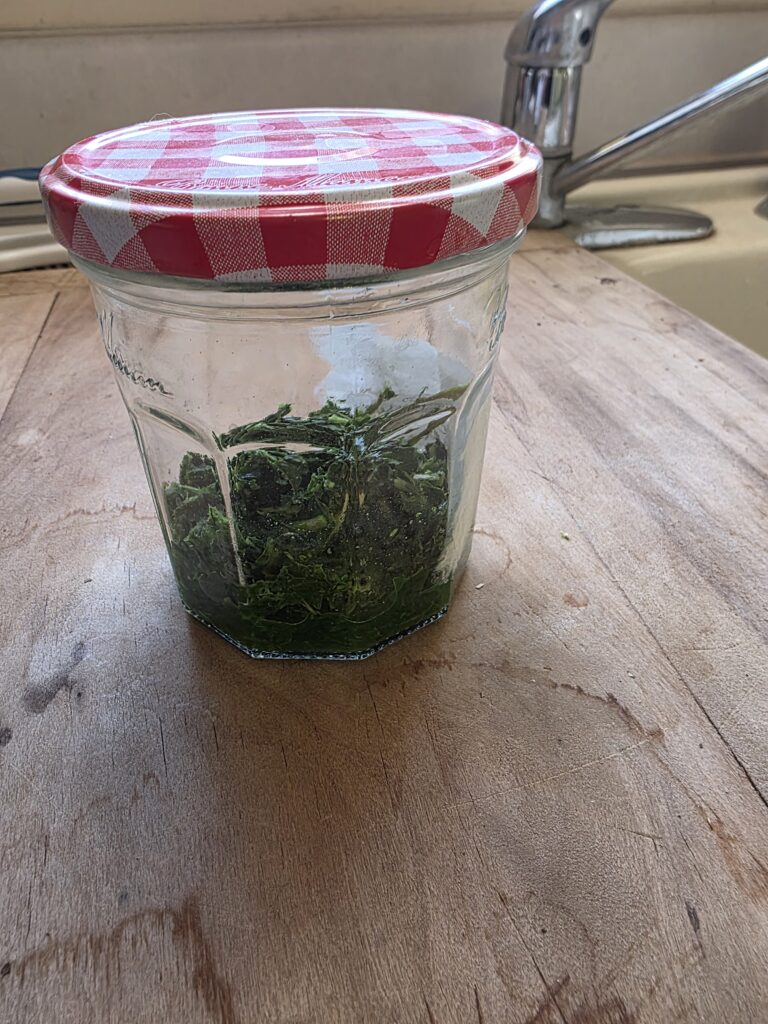
Now put the mixture in a covered jar to sit for a while. If you did not blend and use whole leaves or roots, you need to let it sit for about 6-8 weeks. If blended, you can get away with a week or two.
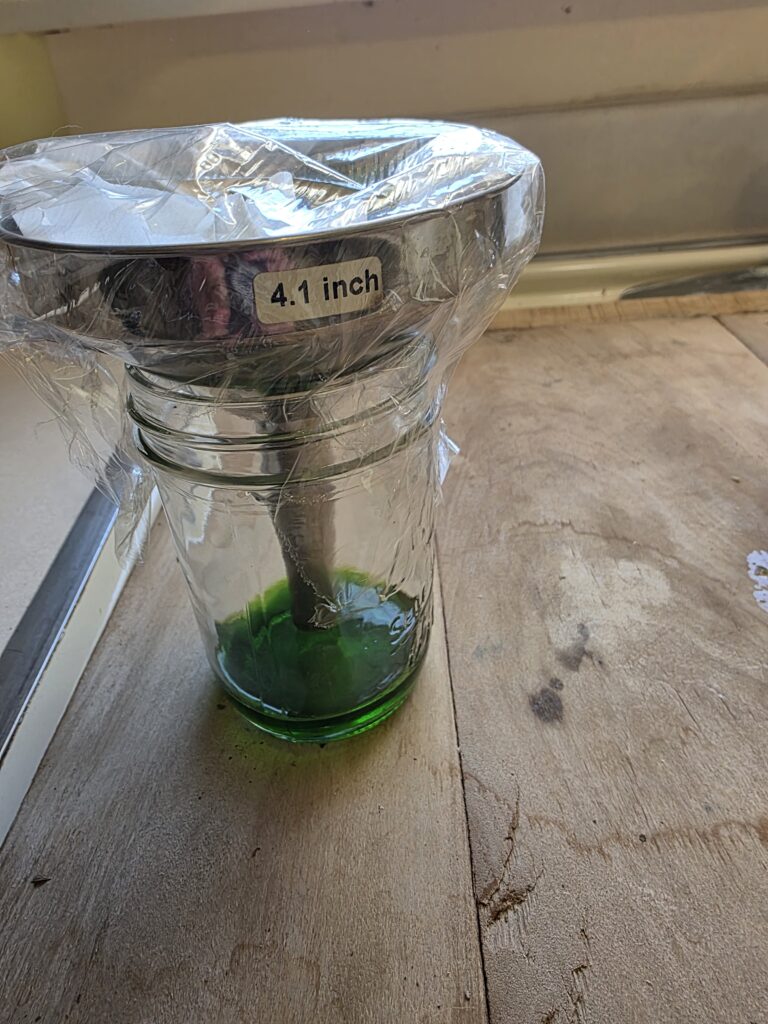
After a few weeks, you will want to strain this to finish it. I use a funnel lined with a coffee filter, put the mixture in it, place the funnel in another jar, and cover with plastic wrap. This prevents evaporation while the tincture drains/filters into the jar. This may take a while. I set mine up and leave it for a few days to drain.
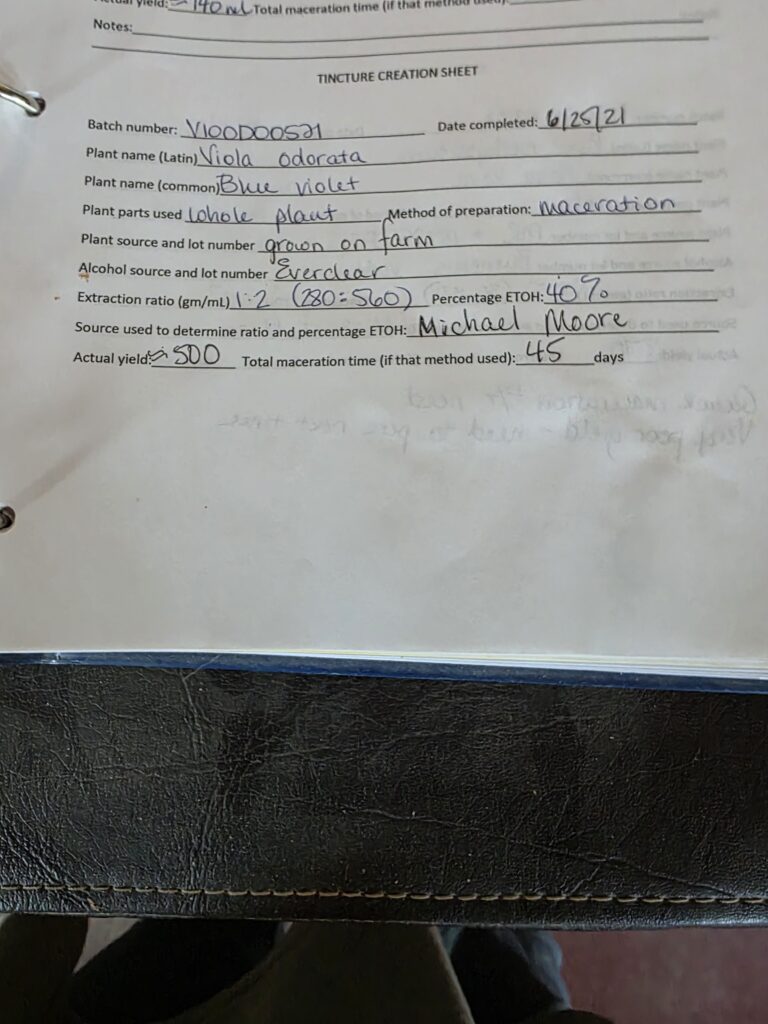
When it is done draining and you can’t extract one more drop, put it in a dark glass bottle, cap, and LABEL IMMEDIATELY. Trust me on that – you will forget. Your tincture is now ready for use. I also keep a log with tincture worksheets like this one, so I can track how and when I made each tincture. I label my tinctures with the Latin name and the date finished.
I hope you try making your own tinctures. Tell me about them; I would love to hear from you!
Leave a Reply